
In today's rapidly evolving digital marketplace, choosing the right eCommerce platform can make or break your online business. While proprietary solutions like Shopify and BigCommerce dominate marketing conversations, open-source eCommerce platforms offer hidden advantages that smart businesses are leveraging to gain competitive edges. From unlimited customization potential to zero licensing fees, open-source solutions provide freedom that closed platforms simply cannot match.
This comprehensive guide explores the untapped benefits of open-source eCommerce platforms, compares leading solutions across different technology stacks, and reveals why forward-thinking businesses are making the switch.
Popular Open Source eCommerce Platforms by Technology Stack
Open-source eCommerce platforms span multiple technology ecosystems, each offering unique advantages for different business requirements and developer expertise.
.NET-Based Platforms
1. nopCommerce
Website: https://www.nopcommerce.com
GitHub: https://github.com/nopSolutions/nopCommerce
nopCommerce stands as the most popular open-source eCommerce platform in the .NET ecosystem. Built on ASP.NET Core, it offers enterprise-grade features including multi-store management, multi-vendor support, responsive themes, extensive plugin architecture, and powerful SEO capabilities. The platform is known for its clean architecture, scalability, and robust security features that enterprise businesses demand.
2. Virto Commerce
Website: https://virtocommerce.com
Virto Commerce targets enterprise B2B and complex B2C scenarios with headless architecture, microservices design, and advanced modularity. It excels in handling complex catalogs, pricing rules, and business workflows.
PHP-Based Platforms
1. Magento (Adobe Commerce Open Source)
Website: https://business.adobe.com/products/magento/open-source.html
GitHub: https://github.com/magento/magento2
Magento represents the gold standard for enterprise-level PHP eCommerce. With powerful catalog management, advanced SEO, multi-store capabilities, and an extensive marketplace of extensions, Magento handles high-volume, complex eCommerce operations. The platform offers unparalleled flexibility and scalability for growing businesses.
2. WooCommerce
Website: https://woocommerce.com
GitHub: https://github.com/woocommerce/woocommerce
Built as a WordPress plugin, WooCommerce powers over 30% of all online stores globally. Its strength lies in ease of use, extensive plugin ecosystem, excellent content marketing integration, and massive community support. Perfect for small to medium businesses seeking quick deployment with powerful content capabilities.
3. PrestaShop
Website: https://www.prestashop.com
GitHub: https://github.com/PrestaShop/PrestaShop
PrestaShop offers a balanced approach with international commerce features, multi-currency support, tax management, and localization capabilities. Popular in Europe, it provides excellent out-of-the-box features for cross-border selling.
4. OpenCart
Website: https://www.opencart.com
OpenCart focuses on simplicity and lightweight architecture, making it ideal for smaller stores with basic eCommerce needs. Its user-friendly admin panel and straightforward setup appeal to non-technical users.
Node.js-Based Platforms
1. Medusa
Website: https://medusajs.com
GitHub: https://github.com/medusajs/medusa
Medusa represents the modern wave of headless commerce platforms. Built with Node.js and modern JavaScript frameworks, it provides API-first architecture, modular design, and developer-friendly workflows. Perfect for businesses seeking to build custom shopping experiences across multiple channels.
2. Reaction Commerce
Website: https://reactioncommerce.com
Reaction Commerce offers real-time architecture with GraphQL APIs, making it highly responsive and modern. It emphasizes speed, scalability, and developer experience with its plugin-based architecture.
React-Based Platforms
1. Gatsby Store (Headless Commerce with React)
Website: https://www.gatsbyjs.com/docs/building-an-ecommerce-site/
Gatsby enables lightning-fast eCommerce experiences by combining React with static site generation. When paired with headless commerce backends, it delivers exceptional performance and SEO capabilities.
2. Saleor
Website: https://saleor.io
GitHub: https://github.com/saleor/saleor
While backend is Python/Django, Saleor provides a React-based storefront and dashboard. This GraphQL-first platform excels in headless commerce scenarios with excellent frontend flexibility.
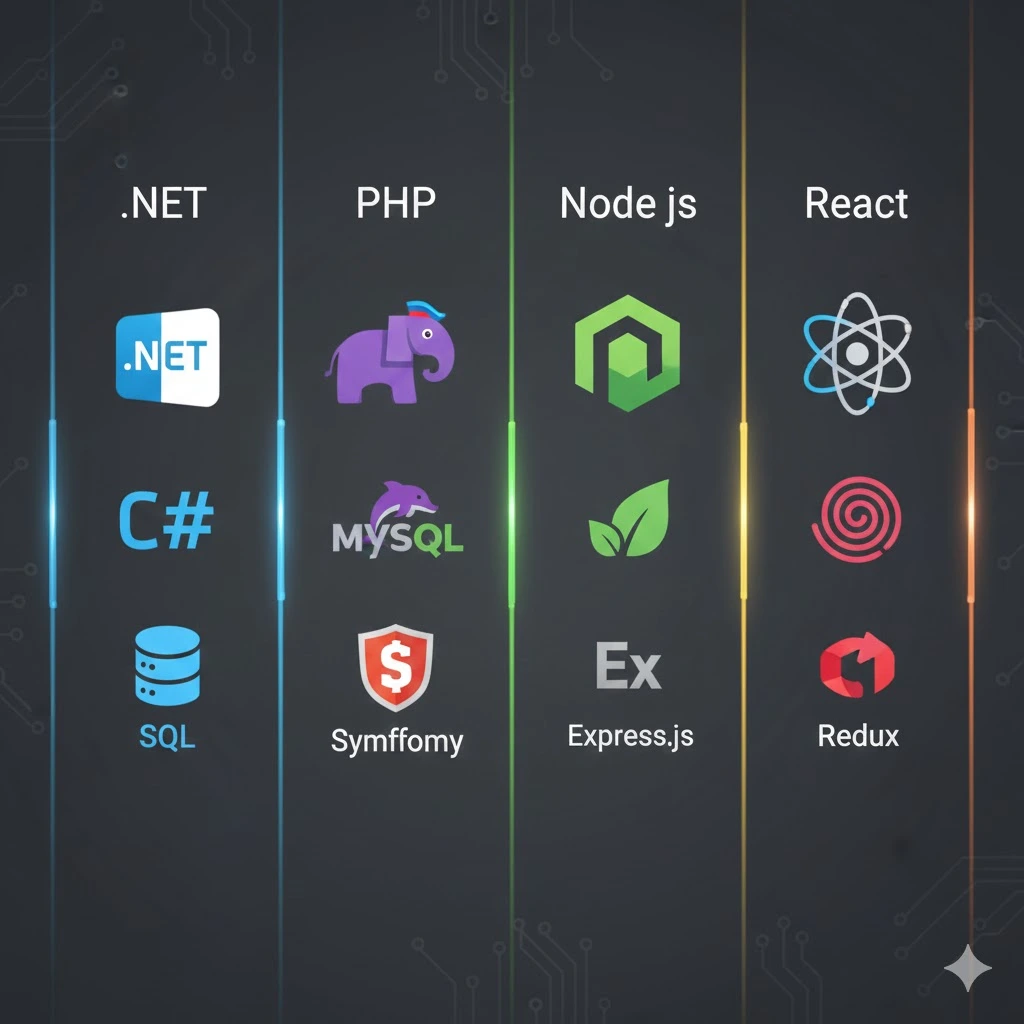
Comprehensive Benefits Comparison
|
Benefit Category |
.NET Platforms |
PHP Platforms |
Node.js/React |
|
Enterprise Readiness |
Excellent - Strong typing, robust architecture, Microsoft ecosystem integration |
Excellent - Mature platforms like Magento dominate enterprise space |
Growing - Modern architecture but less enterprise adoption currently |
|
Performance |
Very Fast - Compiled language with excellent performance optimization |
Good - Can be optimized well but requires careful configuration |
Excellent - Async architecture and modern JavaScript provide great speed |
|
Developer Availability |
Moderate - Specialized .NET developers needed |
Abundant - Largest developer pool globally |
Growing - Modern JavaScript developers increasingly available |
|
Hosting Costs |
Moderate to High - Windows Server licensing or Azure costs |
Low to Moderate - Widely available shared hosting options |
Low to Moderate - Efficient resource usage, cloud-native design |
|
Customization Ease |
Excellent - Clean architecture, dependency injection, strong typing |
Excellent - Extensive plugin ecosystems and hooks |
Excellent - Modern modularity, API-first design |
|
Community Support |
Growing - Smaller but highly engaged community |
Massive - Decades of forums, plugins, themes, tutorials |
Rapidly Growing - Modern developer community, active GitHub |
|
Headless Commerce |
Strong - API-first capabilities in modern versions |
Evolving - Traditional but adding API capabilities |
Native - Built for headless from ground up |
|
Security |
Excellent - Strong typing prevents many vulnerabilities |
Good - Mature security practices but requires vigilance |
Good - Modern security practices, needs proper configuration |
The Hidden Benefits of Open Source eCommerce
1. True Cost of Ownership Transparency
Unlike SaaS platforms with hidden fees, transaction charges, and surprise price increases, open-source platforms offer complete cost transparency. You pay for hosting, development, and maintenance without platform vendor markup. This predictability enables accurate financial planning and often results in 40-60% cost savings over 3-5 years compared to enterprise SaaS solutions.
2. Data Sovereignty and Ownership
Your customer data, sales records, and business intelligence belong entirely to you. Open-source platforms eliminate vendor lock-in and data portability concerns. This becomes critical for compliance with GDPR, CCPA, and industry-specific regulations where data residency and control are paramount.
3. Unlimited Customization Without Restrictions
Access to complete source code means zero limitations on customization. Want to modify checkout flow? Build custom integrations? Create unique product configurations? Everything is possible. This flexibility becomes invaluable for businesses with unique workflows or complex requirements that SaaS platforms cannot accommodate.
4. Community-Driven Innovation
Open-source platforms benefit from thousands of developers worldwide contributing improvements, security patches, and new features. This collective intelligence often outpaces proprietary development teams, ensuring your platform remains cutting-edge without waiting for vendor roadmaps.
5. Multi-Channel Commerce Flexibility
Modern open-source platforms excel in omnichannel scenarios. Build mobile apps, integrate IoT devices, create voice commerce experiences, or power marketplace integrations without platform restrictions or additional licensing fees. Your eCommerce backend serves all channels seamlessly.
6. No Transaction Fee Constraints
As sales grow, SaaS platforms often charge percentage-based transaction fees that can total hundreds of thousands annually. Open-source platforms have zero transaction fees, allowing high-volume sellers to scale without profit erosion.
7. Integration Freedom
Integrate with any ERP, CRM, PIM, payment gateway, or business system without depending on platform marketplace approval or paying integration premiums. Direct API access and source code visibility enable seamless system connectivity.
8. Performance Optimization Control
Optimize every aspect of performance from database queries to caching strategies. Deploy on infrastructure optimized for your specific traffic patterns and geographic distribution, achieving speeds impossible on shared SaaS infrastructure.

Customization Possibilities Across Platforms
.NET Platform Customization
nopCommerce and other .NET platforms excel through plugin architecture, dependency injection, and event-based systems. Developers can override default behaviors, create custom entities, modify business logic without touching core code, and integrate seamlessly with existing .NET ecosystems.
Key capabilities:
• Custom payment gateway integration with full checkout control
• Advanced product configuration engines for complex B2B scenarios
• ERP synchronization with real-time inventory management
• Custom pricing rules and discount engines
• Multi-tenant architecture for marketplace platforms
PHP Platform Customization
Magento, WooCommerce, and PrestaShop offer extensive hook systems, module development frameworks, and theme customization. The massive developer community means solutions exist for nearly any requirement, with thousands of extensions available.
Key capabilities:
• Subscription and membership commerce models
• Advanced catalog management with complex attribute systems
• Multi-warehouse inventory orchestration
• International tax and duty calculations
• Custom promotional rule engines
Node.js/React Platform Customization
Modern platforms like Medusa and Reaction Commerce embrace API-first architecture, enabling unprecedented frontend flexibility. Build progressive web apps, native mobile experiences, or innovative interfaces while maintaining a robust backend.
Key capabilities:
• Headless storefronts with React, Vue, or Angular
• Real-time inventory and order updates via WebSockets
• Microservices architecture for specific functionality
• Custom admin dashboards and analytics
• IoT integration for connected commerce experiences
When Open Source Might NOT Be Right
Honesty about limitations helps make informed decisions. Open-source platforms may not suit businesses that:
• Lack technical resources or development budget - Customization and maintenance require developer expertise
• Need immediate deployment with zero configuration - Setup requires more effort than SaaS turnkey solutions
• Prefer vendor-managed updates and security - You own responsibility for platform maintenance
• Want comprehensive support packages - Community support requires more self-service learning
• Operate with extremely limited technical knowledge - Basic troubleshooting demands technical understanding
When Open Source Delivers Maximum Value
Open-source platforms shine for businesses that:
• Scale rapidly with high transaction volumes - Eliminate percentage-based transaction fees
• Require unique workflows or business logic - Unlimited customization possibilities
• Value data ownership and compliance control - Complete sovereignty over customer data
• Seek long-term cost predictability - No surprise price increases or feature paywalls
• Need complex system integrations - Direct access to code enables any integration
• Have development resources or partners - Leverage expertise to maximize platform potential
• Build multi-channel commerce experiences - Power web, mobile, IoT without restrictions
Ideal Seller Profiles for Open Source eCommerce
Enterprise B2B Sellers
Complex pricing models, custom ordering workflows, ERP integration, and buyer-specific catalogs require platform flexibility that open-source excels at providing.
High-Volume Retailers
When processing millions in monthly sales, eliminating transaction fees saves substantial operational costs. Infrastructure control enables performance optimization for peak traffic.
Marketplace Operators
Multi-vendor platforms benefit from unlimited customization for commission structures, vendor management, and unique marketplace features that generic SaaS cannot support.
Specialty Product Sellers
Complex product configurations, customization engines, or unique selling requirements demand platform flexibility. Examples include made-to-order manufacturing, configurable products, or specialized industries.
International Sellers
Cross-border commerce with complex tax rules, multi-currency requirements, and localization needs benefits from platform-level customization and control over international features.
Omnichannel Retailers
Businesses selling through physical stores, online, mobile apps, and emerging channels need unified commerce systems with APIs and integrations that open-source enables.
Popular Open Source eCommerce Platform Rankings
By Overall Popularity and Usage
1. WooCommerce - 30%+ global market share, 5M+ active installations
2. Magento/Adobe Commerce - Enterprise dominance, 250K+ live stores
3. PrestaShop - 300K+ active stores, strong European presence
4. nopCommerce - Leading .NET platform, 60K+ stores worldwide
5. OpenCart - 340K+ stores, lightweight solution
By Enterprise Capability
6. Magento/Adobe Commerce - Enterprise features, scalability, B2B excellence
7. nopCommerce - .NET enterprise integration, robust architecture
8. Virto Commerce - Microservices, complex B2B scenarios
9. Saleor - Modern headless architecture for enterprise
10. PrestaShop - Mid-market enterprise features
By Developer Experience and Modern Architecture
11. Medusa - Modern JavaScript, excellent DX, modular design
12. Saleor - GraphQL-first, React admin, great documentation
13. Reaction Commerce - Real-time, modern stack, plugin architecture
14. nopCommerce - Clean .NET architecture, ASP.NET Core
15. WooCommerce - Extensive documentation, massive community
By Cost-Effectiveness
16. WooCommerce - Lowest hosting costs, abundant affordable developers
17. OpenCart - Minimal resource requirements, simple deployment
18. PrestaShop - Good balance of features and hosting efficiency
19. Medusa - Efficient Node.js, cloud-native design
20. nopCommerce - Higher hosting but excellent long-term value
How CloudVerve Technologies Powers Your eCommerce Success
Choosing the right open-source platform is just the beginning. Success requires expertise in implementation, customization, integration, and optimization. This is where CloudVerve Technologies becomes your strategic advantage.
Our Open Source eCommerce Expertise
CloudVerve Technologies specializes in transforming open-source eCommerce platforms into high-performing revenue engines. With deep expertise across the entire technology spectrum - from .NET and nopCommerce to PHP platforms and modern JavaScript solutions - we architect, develop, and optimize eCommerce experiences that drive business growth.
nopCommerce Development Excellence
As certified nopCommerce experts, CloudVerve delivers enterprise-grade .NET eCommerce solutions. Our team builds custom plugins, integrates complex ERP systems, develops multi-vendor marketplaces, and creates sophisticated B2B ordering platforms. We leverage nopCommerce's robust architecture to deliver scalable solutions that grow with your business.
Cross-Platform Proficiency
Whether you need Magento customization, WooCommerce optimization, or modern headless commerce with Node.js platforms, CloudVerve possesses the technical depth to execute flawlessly. Our platform-agnostic approach ensures we recommend and implement the optimal solution for your specific business needs.
Comprehensive Services That Accelerate Growth
Strategic Platform Selection and Architecture
We analyze your business requirements, technical landscape, and growth objectives to recommend the ideal platform. Our architects design scalable systems that accommodate future expansion without costly rebuilds.
Custom Development and Integration
CloudVerve creates tailored functionality that differentiates your business. From custom checkout experiences to complex product configurators, payment gateway integrations to ERP synchronization, we build solutions that match your exact workflows.
Performance Optimization
Speed directly impacts conversion rates. Our optimization experts tune database queries, implement advanced caching strategies, optimize frontend assets, and configure CDNs to deliver lightning-fast experiences that keep customers engaged and purchasing.
Business Process Automation
Reduce manual operations with intelligent automation. CloudVerve implements automated inventory management, order processing workflows, customer communication systems, and business intelligence reporting that free your team to focus on strategic growth initiatives.
Microsoft Dynamics 365 and Power Platform Integration
Leverage our specialized expertise in Microsoft Dynamics 365 CE and Power Platform to create unified business systems. We connect eCommerce platforms with CRM, automate sales processes, build custom business applications, and create comprehensive analytics dashboards using Power BI.
Migration and Modernization
Transitioning from legacy systems or proprietary platforms? CloudVerve manages complex data migrations, preserves SEO value, ensures zero downtime, and modernizes your technology stack without disrupting business operations.
Why Businesses Choose CloudVerve
• Proven Track Record: Successfully delivered 100+ eCommerce projects across diverse industries
• Technical Excellence: Certified developers specializing in .NET, nopCommerce, and modern web technologies
• Business-Focused Approach: We prioritize ROI, conversion optimization, and measurable business impact
• Transparent Communication: Clear project timelines, regular updates, and collaborative partnerships
• Global Service, Local Excellence: Based in Surat, Gujarat, serving clients worldwide with dedicated support
• Continuous Innovation: We stay ahead of technology trends to future-proof your investment
Ready to Transform Your eCommerce Business?
Let CloudVerve Technologies guide you to the perfect open-source solution and accelerate your online growth.
Schedule Your Free Consultation Today
Email: sales@cloudverve.com
Website: www.cloudverve.in
Phone: +91 8140223926
Conclusion: The Open Source Advantage
Open-source eCommerce platforms represent more than cost savings - they embody freedom, control, and unlimited potential. Whether you choose the enterprise strength of nopCommerce and Magento, the accessibility of WooCommerce, or the modern architecture of Medusa and Saleor, open-source solutions deliver competitive advantages that proprietary platforms cannot match.
The hidden benefits - from data sovereignty to integration freedom, from elimination of transaction fees to unlimited customization - compound over time, creating increasingly valuable business assets. With the right development partner, these platforms transform from code repositories into revenue-generating engines perfectly tuned to your business.
CloudVerve Technologies stands ready to be that partner. Our expertise across technology stacks, commitment to business outcomes, and passion for eCommerce innovation ensure your open-source journey delivers exceptional results.
Don't let platform limitations constrain your business potential. Embrace open-source flexibility, partner with CloudVerve Technologies, and build the eCommerce experience your business deserves.
Contact CloudVerve Technologies today to discuss your eCommerce vision.
www.cloudverve.in | Your Partner in Open Source eCommerce Success