
Every few years, a piece of infrastructure quietly shifts the ceiling on what's possible. Containers did it for deployment. APIs did it for software ecosystems. MCP servers are doing it for AI.
If you're evaluating whether MCP servers deserve a place in your technology stack, the question isn't really 'what do they do?' It's 'what do I gain?' So let's talk about the concrete advantages.
1. AI That Actually Gets Work Done
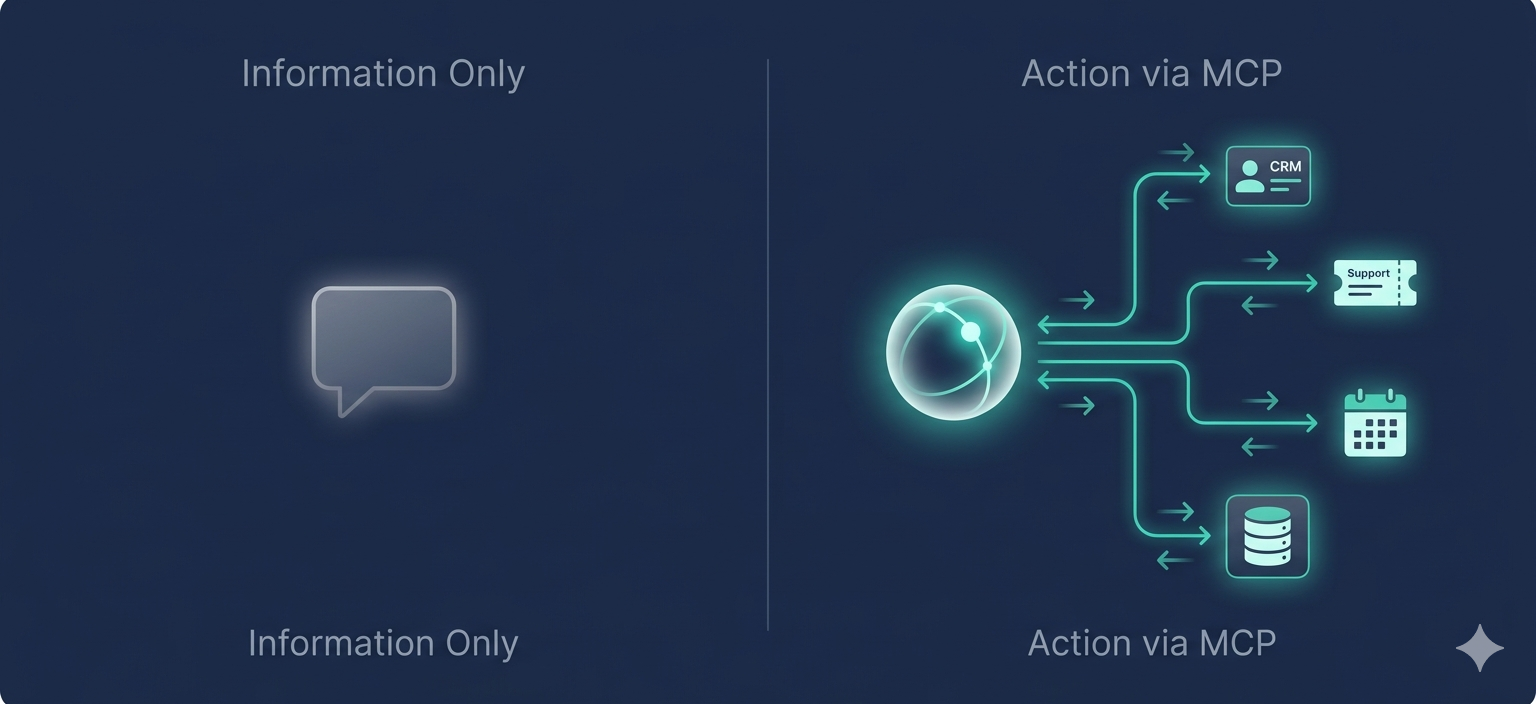
The biggest advantage — and the one that justifies everything else — is that MCP servers turn AI from a chatbot into a doer. An AI model on its own can tell you what it would do. An AI paired with an MCP server actually does it: creates the ticket, sends the email, queries the database, updates the record, schedules the meeting.
The leap from 'information' to 'action' is where ROI lives. Summaries save minutes. Completed workflows save hours and headcount.
2. A Single Integration Layer
Before MCP, every new AI capability meant a new custom integration. Ten tools meant ten different connectors, each with its own auth, error handling, rate limits, and maintenance burden. MCP consolidates that into a single, standardized layer.
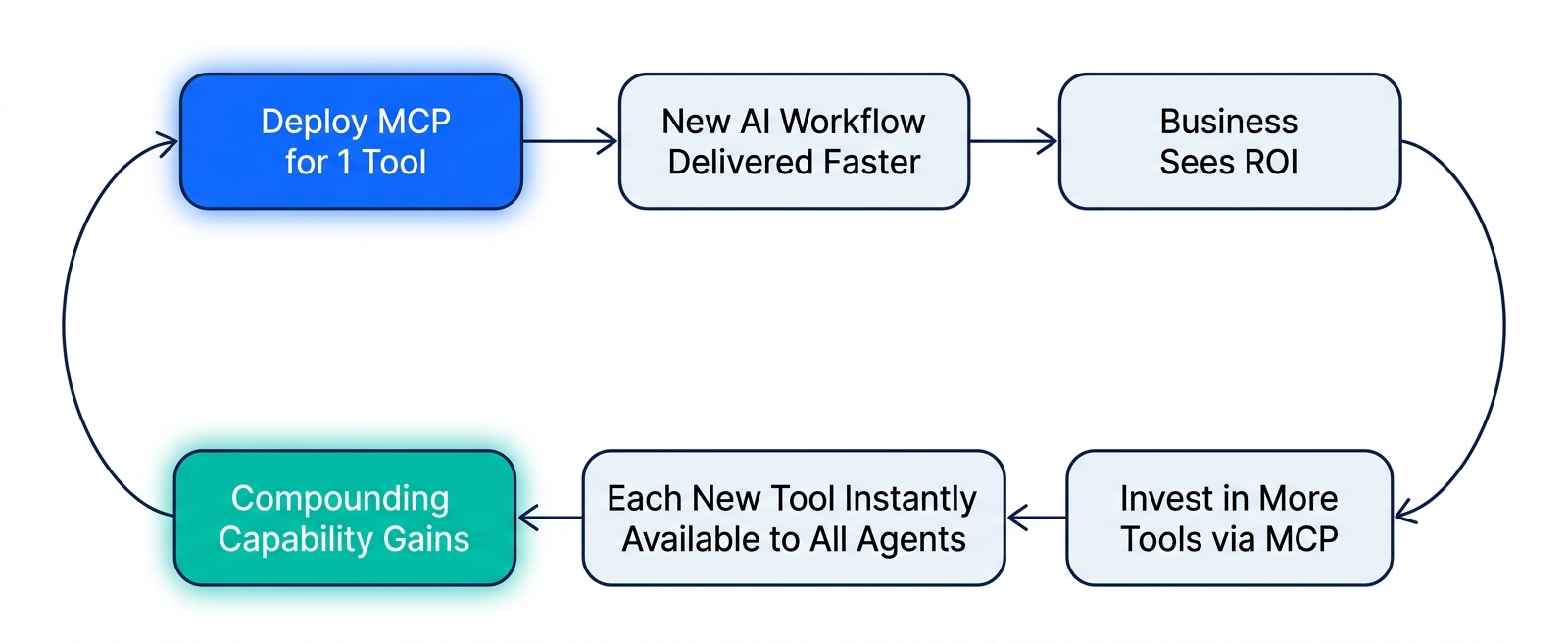
The advantage is compounding: the more tools you connect through MCP, the more valuable each additional connection becomes, because every new tool is immediately usable by every existing agent.
3. Vendor Independence
MCP is an open standard. That matters more than it sounds. It means the AI model you use today isn't the AI model you're forced to use in two years. It means if a tool vendor changes direction, pricing, or ownership, your architecture doesn't collapse with them.
In a market moving as fast as AI, optionality is a competitive advantage. MCP preserves yours.
4. Faster Time-to-Value
When the foundation is already in place, adding a new AI-powered workflow stops being a 'project' and starts being a configuration. Teams that used to wait months for custom integrations can stand up new capabilities in days.
That speed changes the calculus internally. Instead of prioritizing a few high-stakes AI initiatives per year, organizations can run dozens of smaller experiments — and let the winners scale.
5. Better Security & Governance
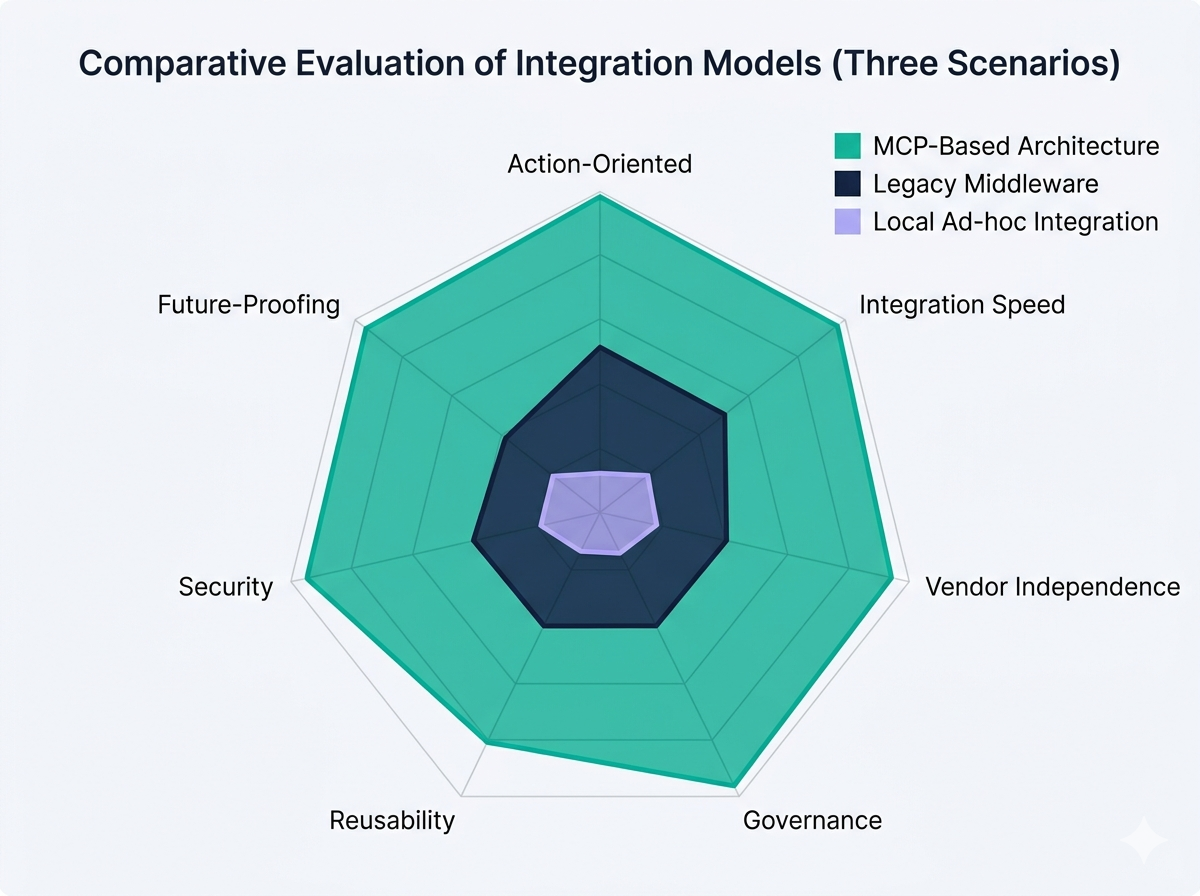
Centralizing AI tool access through MCP servers also centralizes your control points. Authentication, logging, audit trails, permission scopes, rate limits — all of it happens at the MCP layer. That's a far cleaner story for security and compliance teams than a sprawl of one-off integrations, each with its own access model.
For regulated industries especially, this isn't a nice-to-have. It's table stakes.
6. Reusable Infrastructure Across Teams
An MCP server built for the support team can be reused by the sales team. A data-access MCP server built for analytics can be reused by operations. Instead of every department building its own AI plumbing in isolation, MCP encourages shared infrastructure and consistent patterns across the organization.
This reduces cost, improves quality, and prevents the 'shadow AI' problem where every team rolls its own brittle solution.
7. Future-Proofing Without Overcommitting
Perhaps the most underrated advantage: MCP servers let you adopt modern AI capabilities without betting the farm. You can start small, prove value, expand incrementally, and pivot as the technology evolves — all without locking yourself into a single vendor's ecosystem or a single team's architecture.
The Bottom Line
The advantages of MCP servers aren't really about the technology itself. They're about what the technology enables: faster experimentation, lower integration costs, cleaner governance, better security, and AI systems that actually produce measurable business outcomes.
Organizations adopting MCP architectures early are building a compounding advantage. Every new tool, every new model, every new use case slots into a foundation that's already paying for itself.
Ready to Capture These Advantages in Your Organization?
CloudVerve Technologies specializes in AI and automation services that deliver real, measurable outcomes — not just demos. We help businesses design MCP-driven architectures that unlock productivity, reduce integration overhead, and future-proof their AI investments.
Book a Consultation