
If you've been following the AI space lately, you've probably heard whispers — or outright shouts — about MCP servers. Model Context Protocol (MCP) is quickly becoming the connective tissue between AI models and the systems businesses actually run on. But beyond the buzz, what does real-world MCP server usage actually look like?
Let's walk through the landscape.
Where MCP Servers Are Being Used Today
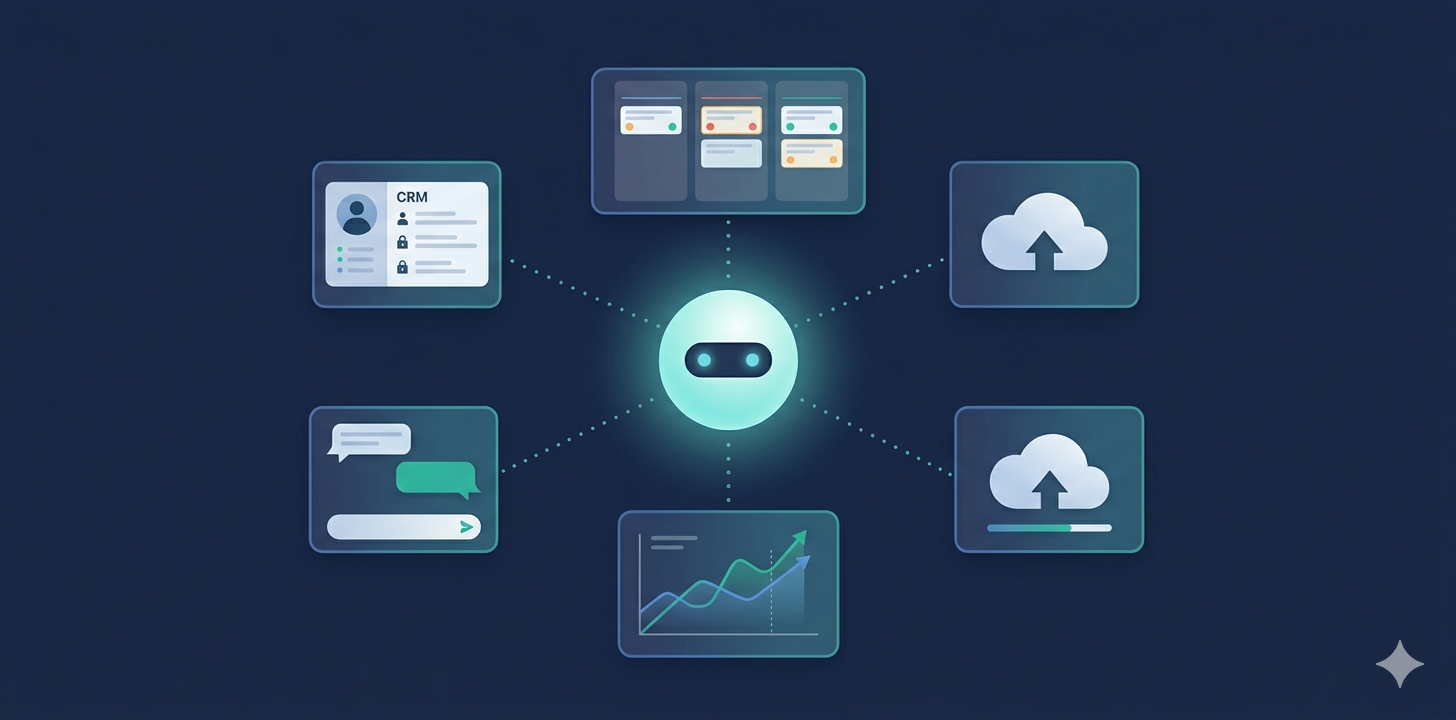
MCP servers act as bridges. On one side, you have AI models like Claude, GPT, or any number of enterprise LLMs. On the other side, you have the tools your business runs on — CRMs, databases, ticketing systems, document repositories, analytics dashboards, internal APIs, and more. The MCP server is the middleman that lets the AI actually do things in those systems instead of just talking about them.
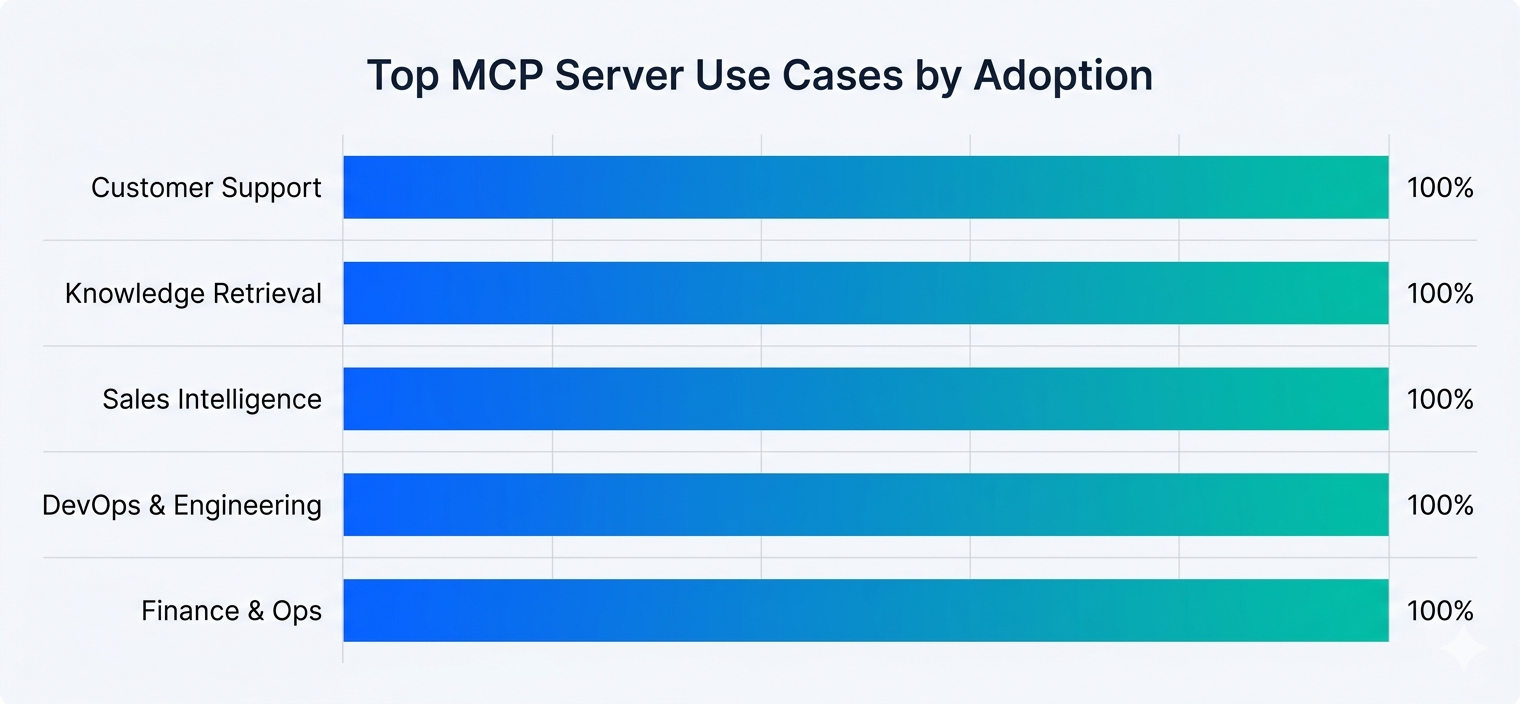
Here are the use cases we're seeing most often:
Customer Support Automation
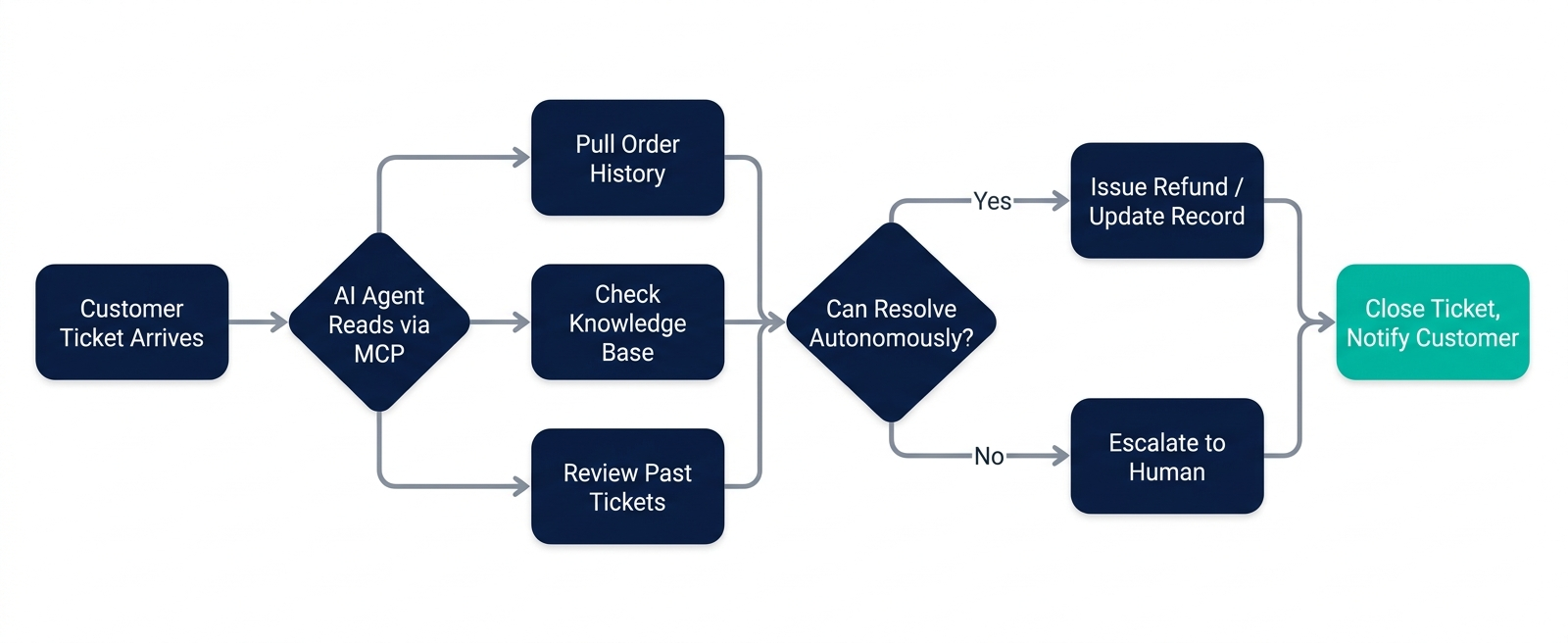
An MCP server connected to your helpdesk, knowledge base, and CRM lets an AI agent resolve tickets end-to-end — pulling order history, issuing refunds, updating records, and escalating edge cases to humans. No hand-off gaps.
Sales & Lead Intelligence
Sales teams are wiring MCP servers into their CRM, email, and enrichment tools so AI can draft personalized outreach, log activities automatically, and surface deals that need attention before the weekly review.
Internal Knowledge Retrieval
Instead of employees hunting through SharePoint, Confluence, Notion, Google Drive, and Slack separately, an MCP server unifies access. Ask a question, get an answer sourced from wherever it actually lives.
DevOps & Engineering Workflows
Teams connect MCP servers to GitHub, Jira, monitoring tools, and CI/CD pipelines. The AI triages incidents, drafts PR reviews, and keeps documentation in sync with code.
Finance & Operations
Invoice processing, expense categorization, reconciliation, and report generation — all powered by AI that reads from ERPs and writes back to them through an MCP layer.
Why This Matters
The common thread across all these use cases is that MCP servers move AI from a passive assistant (answers questions) to an active participant (completes work). That's the shift. That's why organizations are investing.
A support AI that can only summarize tickets is a productivity boost. A support AI that can read customer history, issue credits, update statuses, and file internal bugs — through an MCP server — is a team member.
Usage Trends Worth Watching
A few patterns are emerging as MCP adoption accelerates:
Companies are moving from single-purpose integrations to composable ecosystems, where one AI can reason across five or ten tools in a single workflow. The value compounds the more tools you connect.
Security-sensitive industries — healthcare, finance, legal — are deploying private MCP servers inside their own infrastructure, keeping sensitive data off third-party platforms while still getting the benefits of modern AI.
And mid-market companies, not just enterprises, are catching on. The barrier to entry has dropped, and the ROI is showing up fast.
Ready to Put MCP Servers to Work in Your Business?
At CloudVerve Technologies, we help companies design, deploy, and scale AI and automation solutions — including custom MCP server integrations tailored to your workflows and systems. Whether you're exploring your first AI agent or scaling an existing deployment across departments, our team can help you move from idea to production faster.
Contact CloudVerve