
Ask any engineering leader about their biggest AI headache, and you'll likely hear some version of the same answer: integration hell. Every new AI use case used to mean a new bespoke connector, a new authentication dance, a new set of brittle glue code that broke every time a vendor changed an API.
MCP servers are changing that — and the reason is flexibility.
One Protocol, Countless Systems
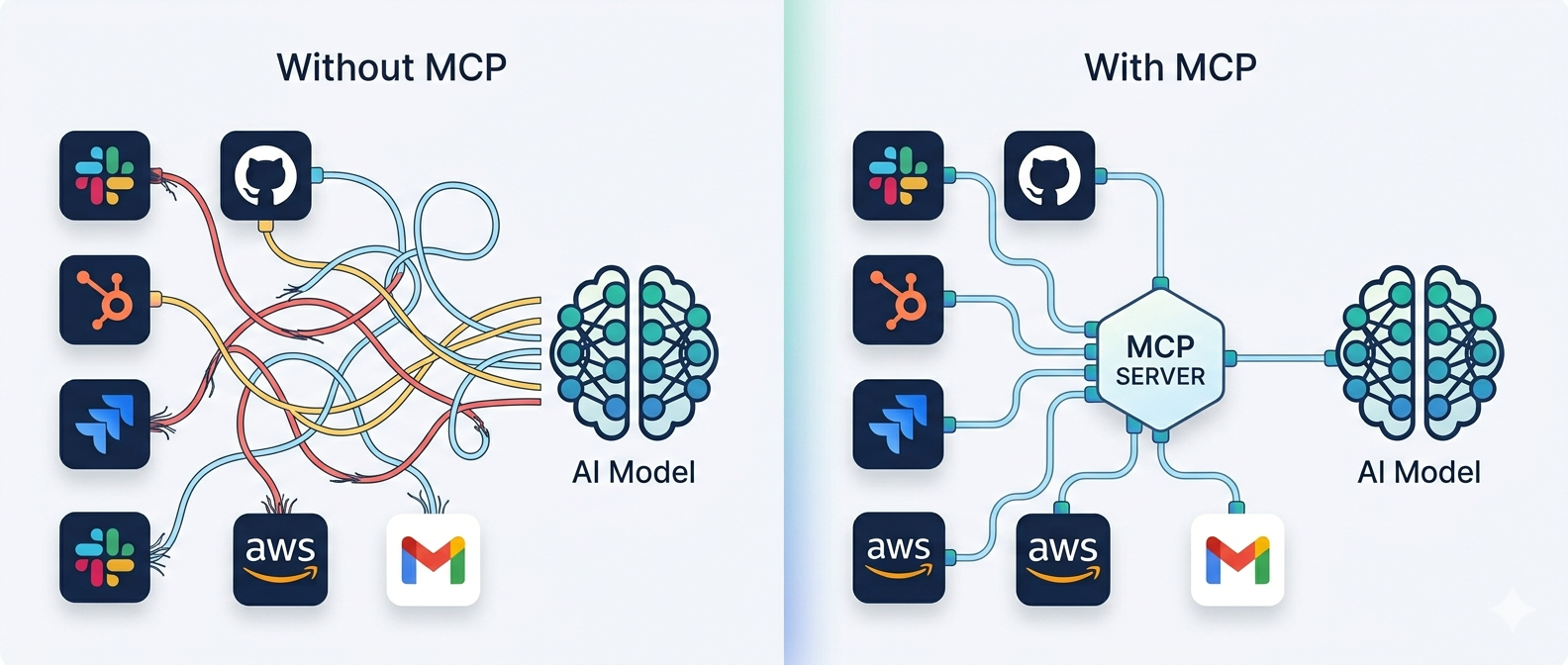
The Model Context Protocol is, at its core, a standard. And standards, when they're designed well, unlock enormous flexibility. Instead of building a custom integration for every combination of AI model and business tool, MCP gives you a single, consistent way for an AI to discover, call, and interact with external systems.
That means the same AI agent can talk to your Salesforce instance, your PostgreSQL database, your internal ticketing tool, your cloud storage, and your homegrown inventory system — without you writing five different integrations from scratch.
What 'Flexible' Actually Means in Practice
Flexibility is an overused word, so let's get specific about what MCP servers unlock:
Mix and Match AI Models
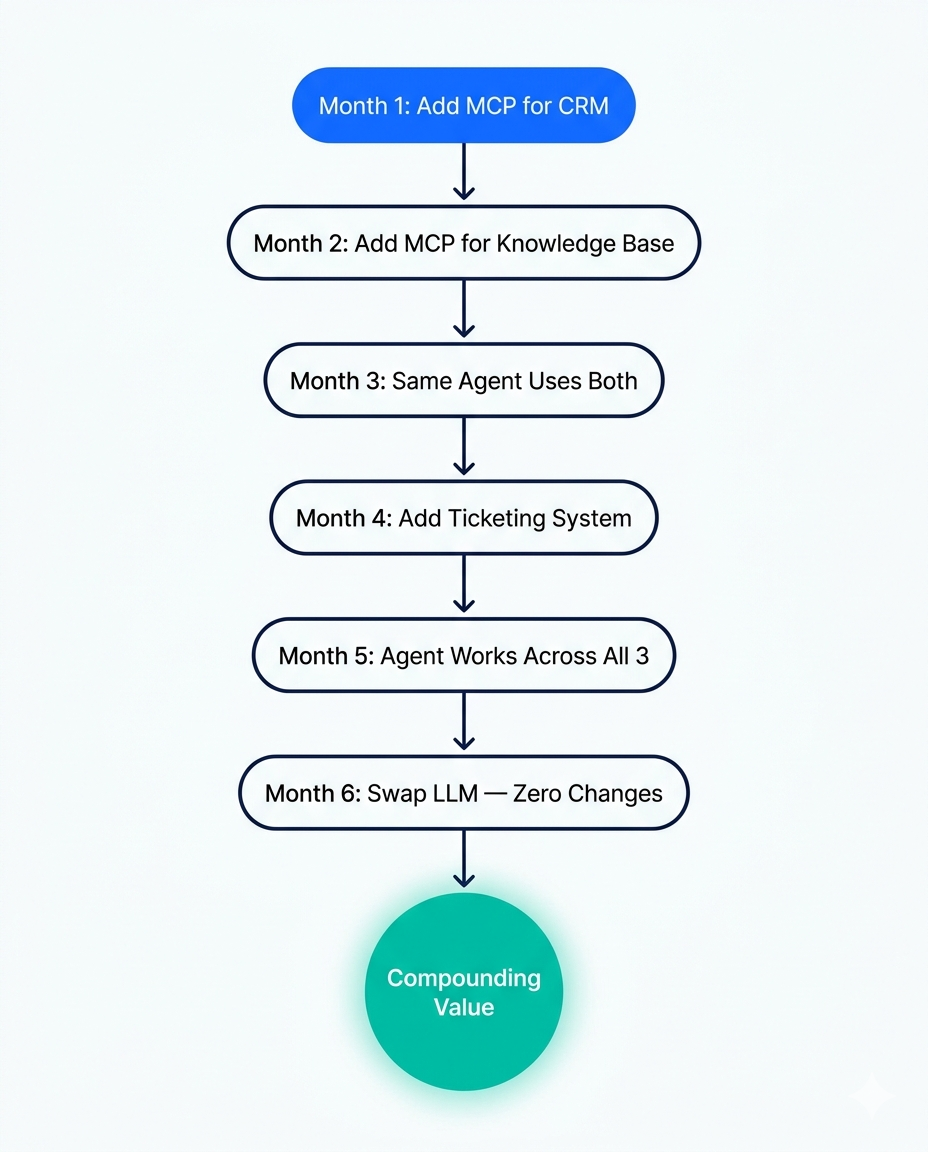
Because MCP is protocol-level, you're not locked into one LLM vendor. The same MCP server that serves one model can serve another tomorrow. If a better, cheaper, or more specialized model emerges, you swap the brain — not the whole nervous system.
Swap Tools Without Rewriting Agents
Migrating from one CRM to another? Moving from Jira to Linear? If both expose MCP servers, your AI workflows barely notice. The abstraction layer protects your investment.
Start Small, Scale Wide
Deploy an MCP server for a single workflow — say, summarizing support tickets — and gradually extend it to handle ticket resolution, customer follow-ups, and internal reporting. No big-bang rewrites.
Combine Public and Private Tools
Mix public services (Gmail, Google Calendar, GitHub) with private internal systems (your proprietary database, your custom ERP) in the same agent workflow. The AI doesn't care where the tools live, as long as they speak MCP.
Granular Permissions
Different users, teams, and agents can have different access levels to the same MCP server. Marketing gets read access. Support gets write access. Finance gets nothing. All through the same layer.
Why Flexibility Matters for Long-Term AI Strategy
Here's the part leadership should pay attention to: the AI landscape is moving incredibly fast. The models, the tools, the vendors, the pricing — all of it is in flux. Betting on rigid, custom-built integrations means betting that nothing will change. That's a losing bet.
MCP's flexibility is really a hedge. It's infrastructure that assumes — correctly — that you'll want to evolve, experiment, and re-architect as the space matures. Instead of locking you in, it lets you pivot.
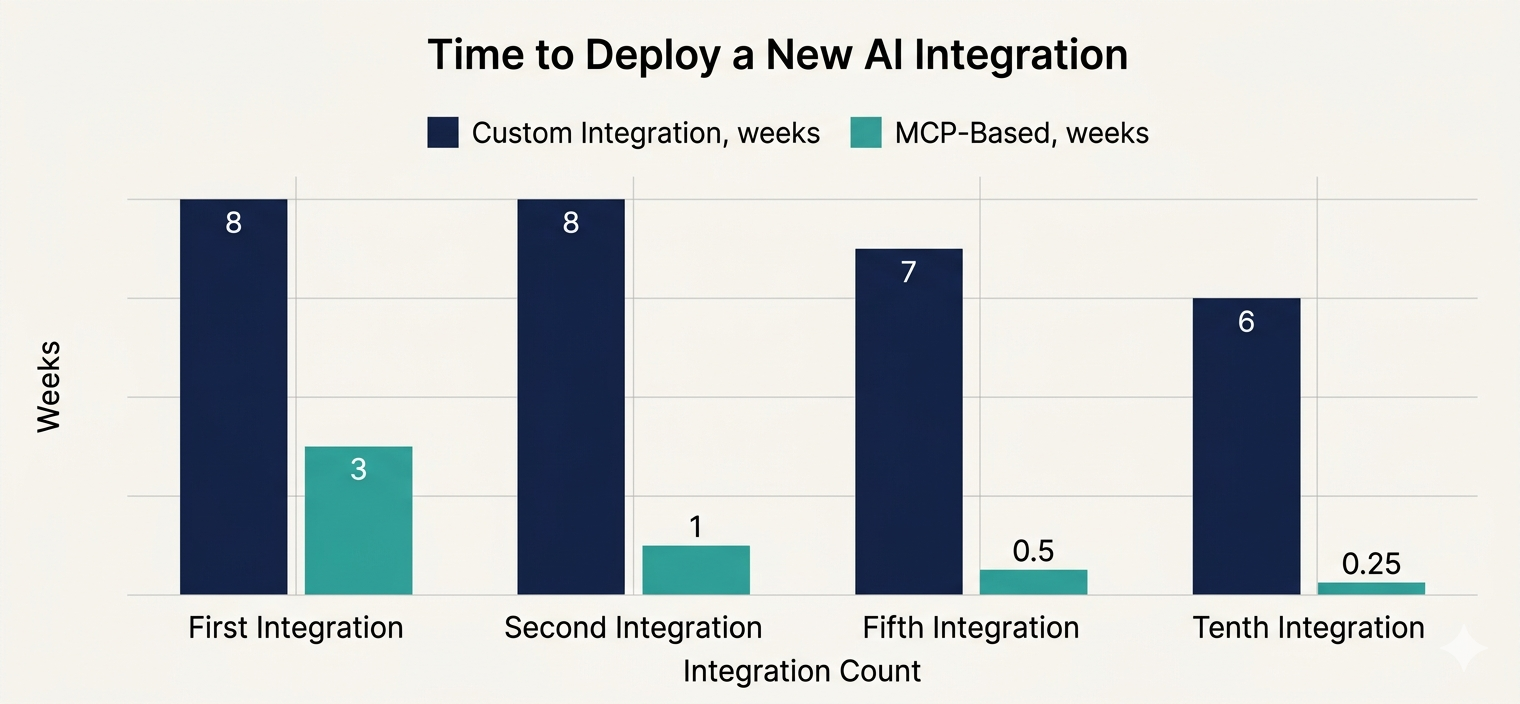
Companies adopting MCP-based architectures report that adding a new AI capability goes from a multi-month project to a multi-day one. That's not a marginal improvement. That's a different operating model.
The Freedom to Say Yes
Perhaps the biggest win is cultural. When your infrastructure is flexible, business teams can bring new ideas to engineering without hearing 'that'll take six months.' MCP servers let AI initiatives move at the speed of the business, not the speed of custom development cycles.
Looking for an AI Architecture That Grows With You?
CloudVerve Technologies builds AI and automation systems designed for the long haul — flexible, modular, and ready to evolve as your business does. We help organizations architect MCP-based solutions that integrate with the tools you already use, scale to the ones you'll adopt tomorrow, and stay vendor-agnostic so you're never boxed in.
Talk to CloudVerve